
Garment Production
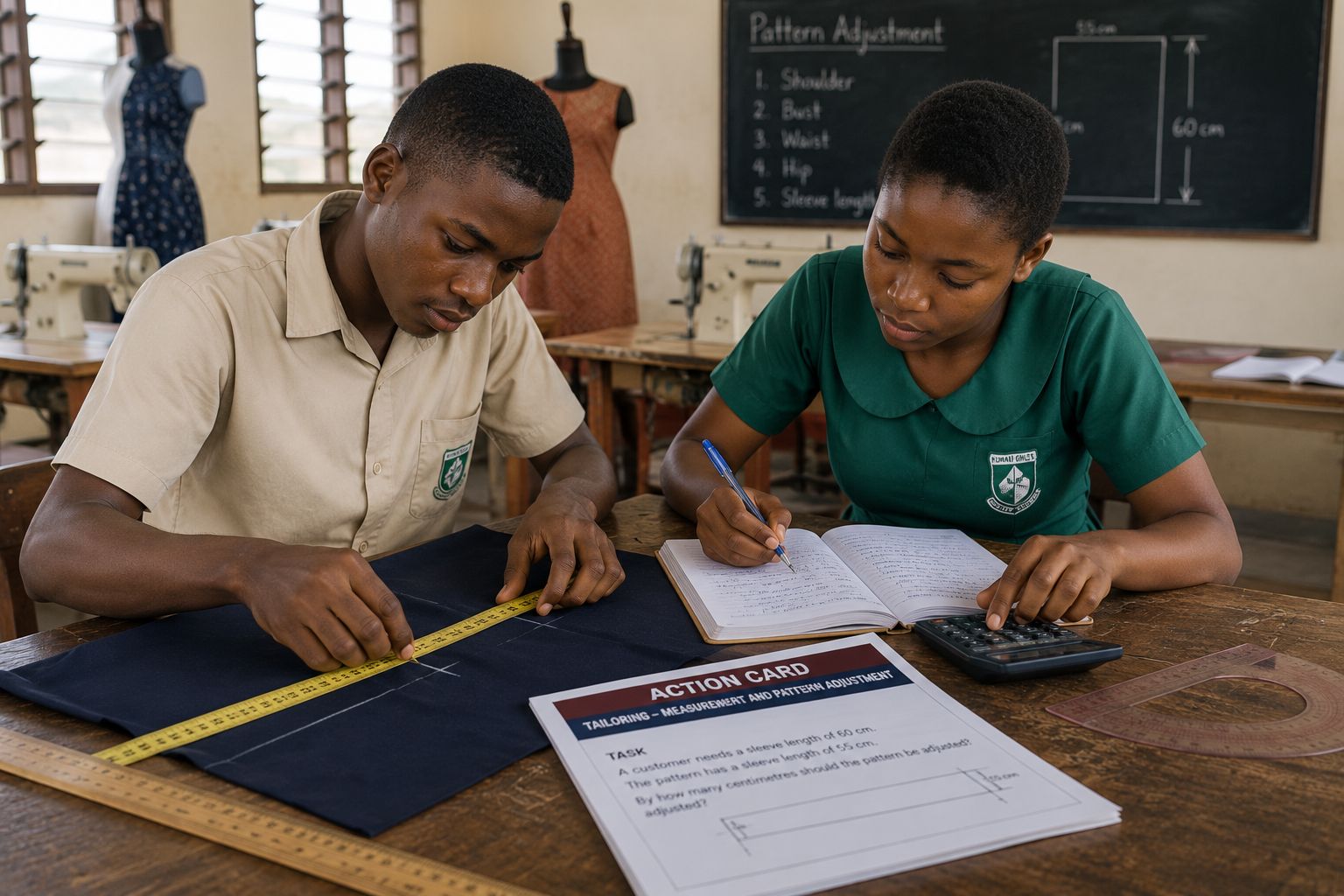
Mathematics is translated through garment production using concepts such as ratio, proportion, measurement and geometric scaling.
Research
CAST's current programme of applied research focuses on education systems, examining how curriculum, learning and institutional practice can strengthen the translation of academic knowledge into practical capability and measurable educational outcomes.
Flagship Programme
The National Strategic Literacy Initiative (NSLI) is CAST's flagship programme of applied research within its Education Systems portfolio.
The programme investigates how academic knowledge can be systematically translated into authentic occupational and community contexts to strengthen learner capability, contextual understanding and the practical application of curriculum knowledge.
Occupational Contexts
Applied Context Mapping identifies authentic occupations and industries through which curriculum concepts can be translated into meaningful learning experiences.
Mathematics is translated through garment production using concepts such as ratio, proportion, measurement and geometric scaling.

Physics is translated through woodworking using concepts including force distribution, equilibrium and structural stability.

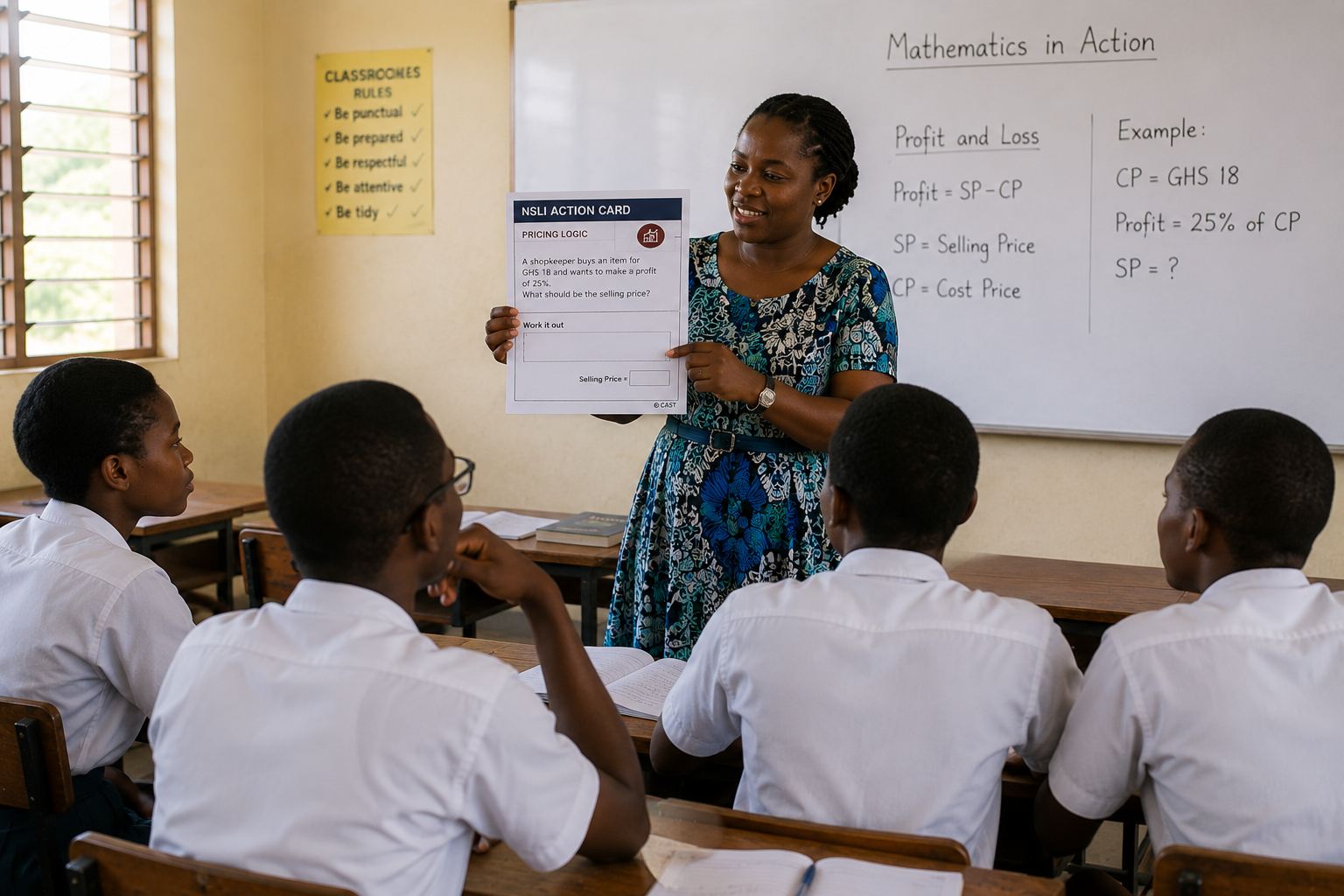
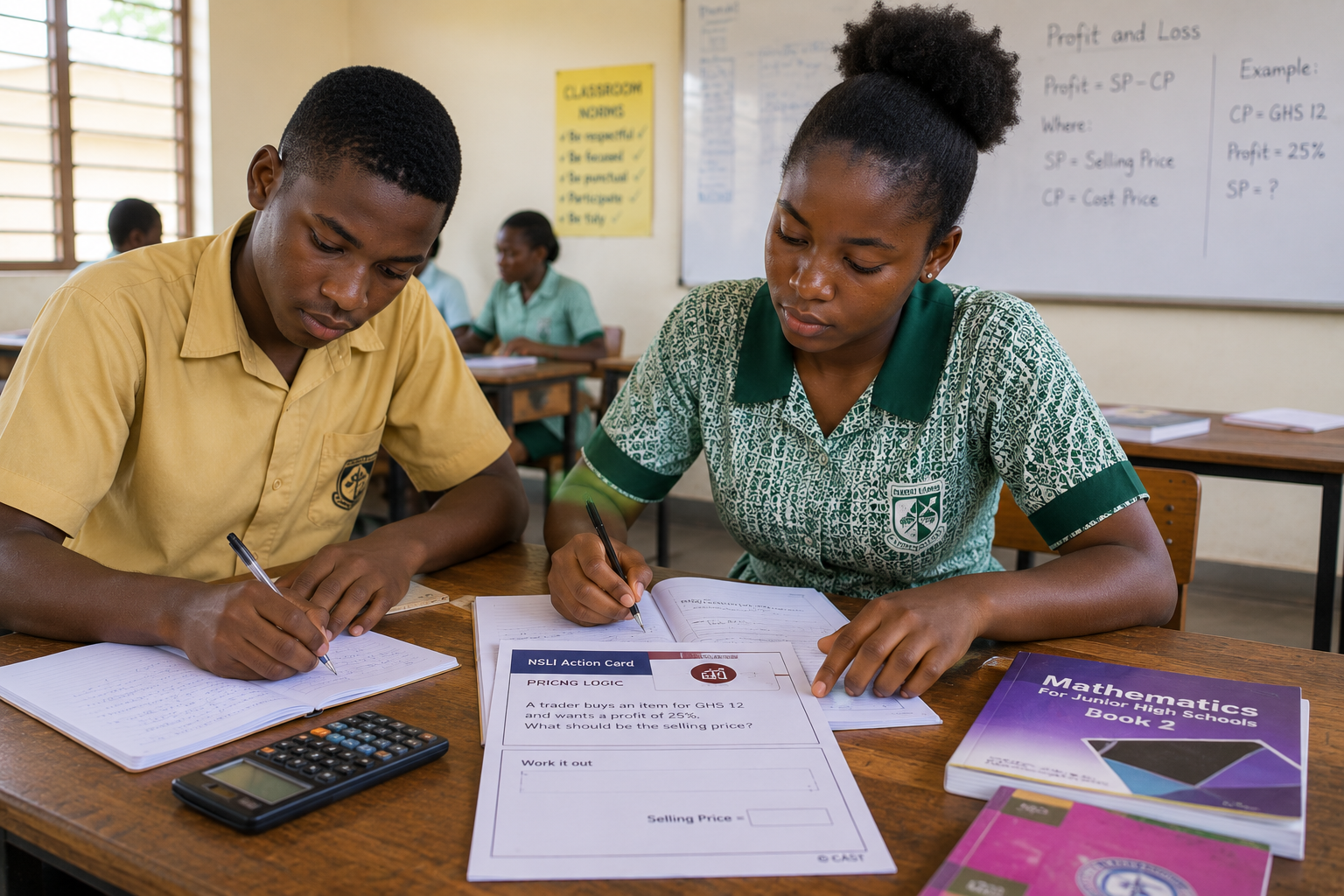
Economics is translated through trading and retail using pricing logic, profit analysis and break-even analysis.
Classroom Translation
NSLI translates authentic occupational contexts into structured classroom learning experiences through Action Cards and contextual learning activities, enabling learners to recognise how curriculum knowledge is applied beyond the classroom.
Research Components
NSLI brings together a set of integrated programme components that support the translation of academic knowledge into practical learning experiences and the generation of research evidence.
The conceptual model guiding how academic knowledge is translated into meaningful occupational and community contexts.
A systematic process for identifying authentic occupations, industries and community settings through which curriculum concepts can be meaningfully applied.
Structured learning experiences that connect curriculum knowledge with authentic problems, environments and practical situations.
Instructional resources that translate mapped occupational contexts into structured classroom learning activities.
The systematic measurement and analysis of programme outcomes to generate evidence capable of informing educational practice, curriculum development and policy.
Future Research
CAST's research portfolio will expand progressively into additional areas of applied systems research as new programmes are developed to address significant societal challenges through evidence generation and systems innovation.
Planned Programme
Planned Programme
Planned Programme